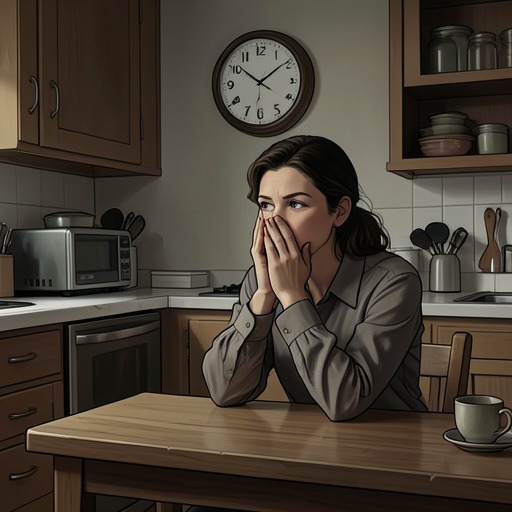
Daily memory reset
Even If This Love Disappears From the World TonightDaily memory reset is the overnight loss of the events Maori Hino has lived through since waking that morning, a recurring consequence of her anterograde amnesia. It divides her experience into days that begin without conscious access to the one before, but the novel does not treat memory as a single faculty: written records carry facts across the reset, while procedural skill and emotional responses can persist, and sounds or smells can help bring recollection back. The cycle is both a practical condition shaping Maori’s daily choices and the form through which the story tests what can continue when remembered experience does not.
Definition and Daily Operation
Maori explains that she has anterograde amnesia and forgets everything that happened during the day when she goes to sleep. To her, the next morning brings the conviction that the accident happened the previous day. The reset is therefore not presented as a loss of all earlier life: her memories from before the accident remain, while the new experiences she cannot retain are repeatedly returned to the status of events she must learn about from external records.
Tooru Kamiya learns the mechanism in more detail when Maori explains that trauma from her accident left the part of her brain responsible for storing memories dysfunctional. She can hold on to experiences from waking until sleep; as her brain processes them overnight, that day’s memories are erased, leaving her the next morning as she was before the accident. This explanation connects her daily practices—taking notes on her phone, keeping a binder, and photographing events—to a specific need: without records, the day’s experiences will not be available to her after sleep.
The reset also dictates what Maori can safely disclose. Her binder says that only her parents, Izumi Wataya, and her teachers know about her condition. When her parents consulted the school, administrators explained that she could graduate if she attended and met the required number of school days under the national law for disabled students. They also raised the risks of classmates learning about her memory loss: rumors could draw unwanted attention, and an incident could be difficult to address if Maori could not remember it the next day. Her privacy is thus described not simply as a preference but as a way to limit risks and stress. Her doctor’s advice, as recorded in the binder, is to avoid stress, enjoy life, and remain calm.
Records and Repeated Beginnings
The binder and journal make the reset navigable without reversing it. After rereading the binder’s “Important” section, Maori is overwhelmed by the implications of her condition, but the page also directs her to information about her boyfriend and journal entries beginning on May 27. The records give her an account of a relationship that she cannot initially recognize from memory. Their function is practical and emotional at once: they tell her what has happened, while also making clear that the person reading them is not the same conscious self who lived through those moments.
A folder on Maori’s phone labeled “My Boyfriend” contains photographs and videos of Tooru Kamiya. Watching a video of the two of them riding a bicycle, she sees herself enjoying the outing and feels an ache of distance from the happy person on screen. She calls that earlier version of herself yesterday’s self and longs to share in the memories the recording shows. At the same time, she allows that the present day may bring its own enjoyment with Tooru and Izumi Wataya. The reset repeatedly separates her from her past experiences, but the records let her encounter them and choose how to approach the day ahead.
The accumulation of records does not make the cycle emotionally neutral. Maori can feel jealous of the enjoyment her journal attributes to her earlier selves, wanting those memories to belong to her present self. After seeing Tooru, however, that resentment gives way to sympathy for the person who wrote the journal. She notices that her heart responds to him even though he should be a stranger, and wonders whether emotions, unlike stored information, can remain. The distinction matters: her feelings do not supply a full recollection, but they suggest that the reset has not made every form of continuity impossible.
Skills and Feelings That Persist
The novel contrasts conscious recollection with procedural memory. While researching amnesia, Tooru learns that short-term memory holds information briefly, whereas long-term memory includes information reinforced through repeated recall. Anterograde amnesia prevents the formation of new long-term memories, but does not erase the memories that predate the condition. He also learns that declarative memory concerns facts that can be consciously recalled and written down, while procedural memory includes skills such as riding a bicycle, which need not be available as a narrated memory to remain embodied.
Drawing gives Maori a concrete experience of this distinction. She reads the binder’s section on art and tries croquis sketches in the sketchbook, using a film actor as a model. Although she cannot account for her progress as a continuous history, her hand produces more confident lines than in her first drawings. The work carries the practice of previous days forward: she recognizes that she must have been drawing repeatedly, and that the skillful lines contain evidence of those earlier efforts. The daily reset interrupts her conscious ownership of progress, but it does not prevent that progress from taking place.
Emotional response likewise complicates the idea that the reset leaves nothing behind. When Maori sees Tooru again, she feels a slight throb of affection despite not recognizing him as someone she knows. She cautiously considers that she may be starting to like him. This response is not equivalent to remembering their shared history; rather, it is a remaining attachment without an accessible narrative of its origins. The novel keeps that difference visible instead of treating feeling as a substitute for recollection.
Cues, Recovery, and the Meaning of Continuity
Sound and smell offer other, partial routes toward the past. After her memory has recovered, Maori hesitates to look at photographs and videos of Tooru because she fears that their fixed images might displace the image she already holds of him. Instead, she agrees to listen to audio extracted from a video. The recording includes her own happy squeals, and she gradually remembers that it was made on the day she insisted they ride a bicycle together. A sound can lead her toward a specific shared event, although the return of memory is presented as something that unfolds rather than as a complete, automatic reversal of the daily cycle.
A smell also becomes an occasion to consider how recollection may be prompted. Izumi Wataya recounts an aquarium outing during Maori’s period of amnesia: Tooru had packed chirashizushi in the rattan picnic basket and brought tea he thought would accompany it. Maori had said the tea seemed familiar because Tooru had made it for them once before at his home. Izumi explains that smell is connected to the hippocampus, which processes memories and emotions, and that smells can sometimes evoke memories. The familiar tea does not by itself restore the past; the episode instead shows how a sensory cue can approach recollection without guaranteeing that it will return.
The story’s records, skills, feelings, and sensory cues therefore mark different kinds of continuity across the reset. Facts can be written down and reread; drawing can develop through practice the conscious self cannot remember; affection can persist without a remembered explanation; and a recording or familiar smell can bring a particular experience closer. None of these forms erases the disruption of waking without yesterday. Together, however, they prevent the daily cycle from becoming a simple equation between forgetting and total disappearance.
Records After Tooru’s Death
The handling of Maori’s records after Tooru dies shows how powerful—and ethically complicated—external memory can become. Tooru’s sister offers to type the binder and journal into a computer and patch the places where his presence is removed. Izumi and Keiko Nishikawa then prepare a replacement digital record and transfer it to Maori’s laptop. On the third morning after Tooru’s funeral, Izumi gathers the binder and volumes of the journal from Maori’s room and installs the edited files. The plan is for Maori to use the digital versions to learn about herself and her daily life and to continue adding entries.
The revision extends beyond the written journal. Tooru appears in photographs, videos, messages, and text exchanges on Maori’s old phone, so Izumi and Keiko arrange a new phone and messaging account, with explanations prepared for the missing data. Keiko falsifies file timestamps so the replacement material fits the chronology of Maori’s records. These actions aim to remove traces of Tooru, but they also reveal that continuity depends on people who decide what the records will preserve or conceal.
While changing Maori’s reminder notes, Izumi finds a sticky note on the back of one: “Even if I recover, always remember Tooru Kamiya. The important things will always be in an important place.” The note was positioned so Maori might encounter it when taking the paper down after recovering. Its placement makes it a message across time: one version of Maori leaves an instruction for a future self whose memories may return, even as others are editing the records around her.
After recovery, Maori eventually listens to Tooru’s voice and begins to remember him. The daily reset had made written and recorded supports essential, but their meaning changes once memory returns: they are no longer merely substitutes for inaccessible days, and can also serve as cues to a past she may reclaim. In this way, the reset gives the novel its recurring tension between discontinuity and accumulation. Each morning begins with a real gap, yet the life built across those gaps can leave marks in records, skill, emotion, and, eventually, recovered memory.